Matched to the Charger You Bought
Every plug-in charger has its own plug and input rating; the parts behind the wall must line up. We match receptacle, conductors, and breaker to it.
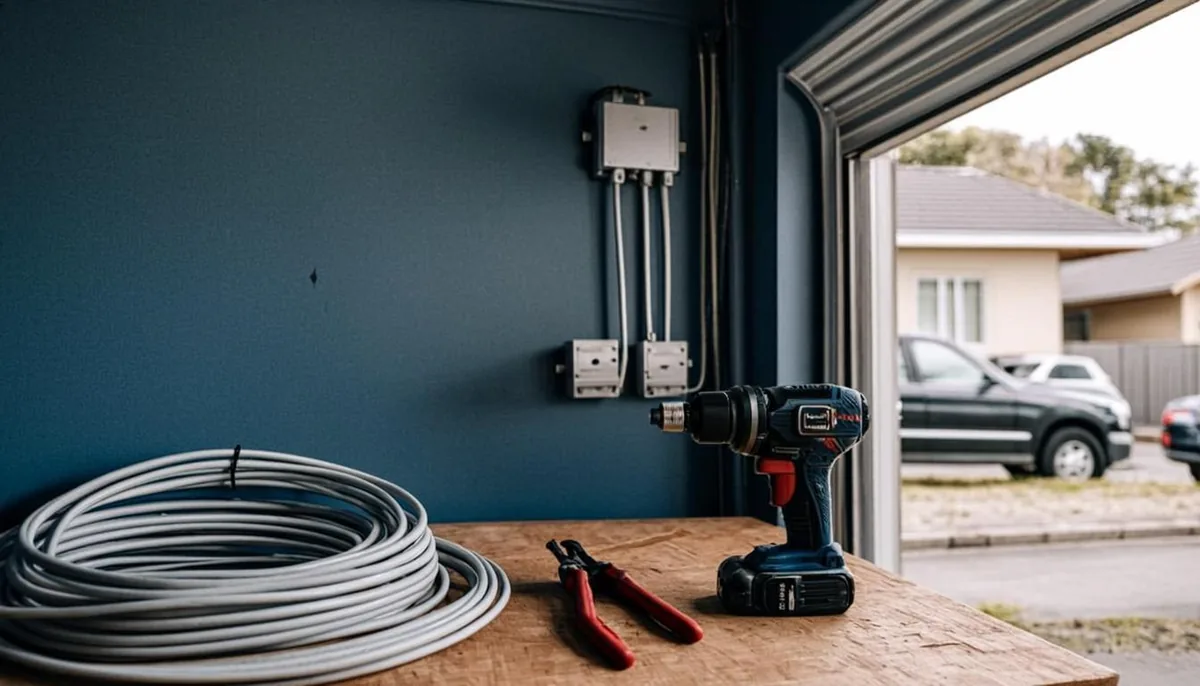
Properly rated 240-volt receptacles and dedicated charging circuits for plug-in Level 2 chargers.
Our 240V EV charger outlet installation in Bothell, WA gives your plug-in Level 2 charger, a 240-volt charging unit, a receptacle worth plugging into.
We install the receptacle, its circuit, and its breaker in garages and driveways across Bothell.
A 240V outlet is a receptacle on its own two-pole circuit, drawing from both service legs. Doubled voltage lets a charger refill an EV overnight.
The NEMA 14-50 receptacle is the outlet most plug-in Level 2 chargers expect, from the family behind electric ranges. Other styles exist; we match outlet to charger.
A plug-in Level 2 charger connects to a 240V outlet the way a dryer does: cord, plug, receptacle. Trade-off: receptacle wear from repeated plugging.
Standard household outlets supply 120 volts; EV charging receptacles run on 240-volt circuits, as the Department of Energy's Alternative Fuels Data Center notes. Higher voltage, more charging power.
| Factor | Plug-in on a 240V outlet | Hardwired charger |
|---|---|---|
| Installation | Receptacle first, then plug in | Wired to the circuit |
| Charger mobility | Unplugs for replacement | Fixed; moving means rewiring |
| Outdoor suitability | Needs weather-rated cover | Sealed unit suits weather |
| Maintenance considerations | Plug contacts wear | Fewer wearing parts |
Deciding on a 240V outlet or a hardwired EV charger comes down to location and plans. Exposed driveways favor hardwired units because their connections stay sealed against weather. Finished garages favor a plug-in charger, where the receptacle stays discreet and the unit swaps out easily. Frequent movers like that flexibility; settled owners often prefer the cleaner look of wired-in equipment.
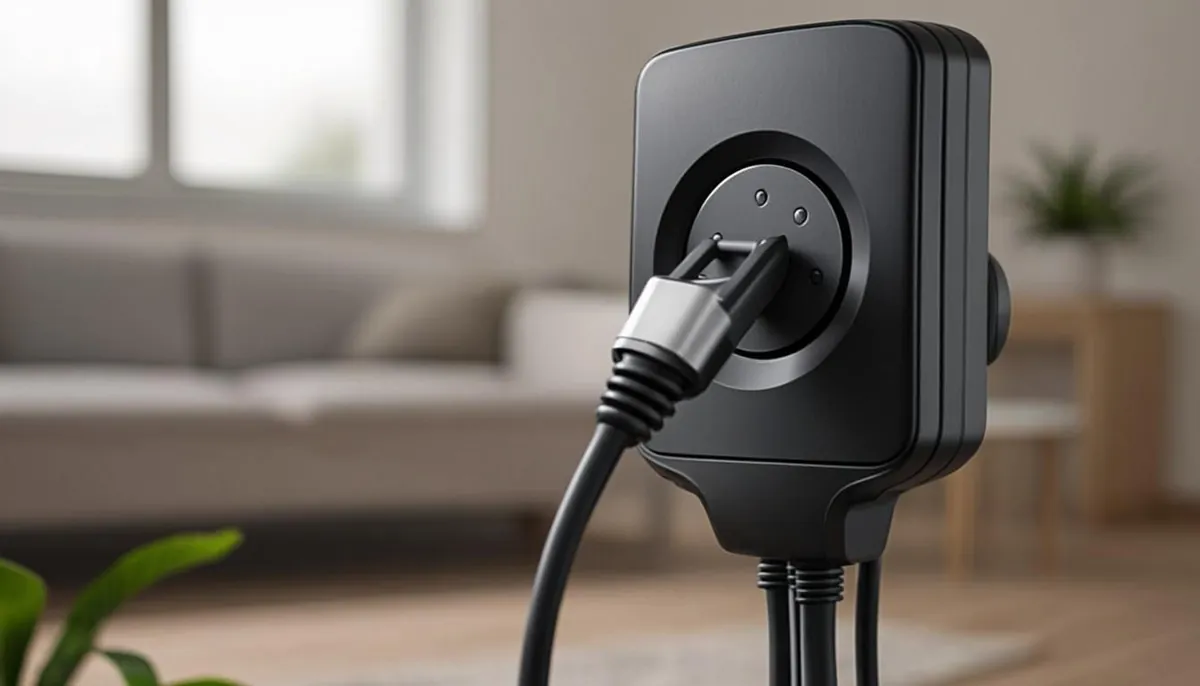
A dedicated circuit serves one outlet and nothing else: no shared wire, no shared breaker, no competing appliance.
The National Electrical Code treats EV charging infrastructure as a continuous load, as the Department of Energy's home charging guidance notes; steady loads need headroom.
Breaker and wire get sized together: the breaker protects the conductor carrying the charger's input rating over the run. Longer runs, larger wire.
Grounding gives stray current a safe path; ground-fault protection cuts power almost instantly if current escapes. Both get verified at the receptacle.
Attached garages are the easy case: the panel is close, the run short, the receptacle nearest your parking spot.
Power reaches the building as a long dedicated run or through detached garage subpanels when the structure has its own panel.
When the driveway is the parking spot, the receptacle moves outside: weather-rated receptacles, covers rated for a plugged-in cord, water-shedding mounting.
Distance is the quiet variable: long runs lose voltage, so conductors get upsized for full power at the outlet.
Panel capacity is the first gate for a 240V EV charger outlet installation in Bothell, WA. A 240V circuit takes a double-pole breaker, which needs two free panel spaces. The load calculation weighs household demands against the panel rating. Load management can throttle charging when the house draws heavily; an electrical panel upgrade in Bothell covers cases where capacity is gone. Our article answers a common question: whether a 100 amp panel can support an EV charger?
What shapes the cost of a 240V EV charger outlet installation in Bothell, WA? Wiring distance leads: a receptacle beside the panel is a simpler pull than one across the garage or out to a detached building. Circuit requirements come next, because conductor size rises with charger input and run length. Garage location matters for the same reason, and exterior walls add weather-rated equipment to the materials. Panel condition, receptacle rating, and the electrical permit round out the list. Each factor appears as its own line in our written estimate.
| Typical 240V EV outlet installation in Bothell | Range* |
|---|---|
| Receptacle and dedicated 40-50 amp circuit, short run near the panel | $300-$800 |
| Longer runs, finished walls, or detached-building pulls | $800-$1,200 |
| Washington L&I electrical permit (state-set fee) | $100-$300 |
Market data puts a 240-volt receptacle with a new dedicated circuit between $300 and $800 for short runs, and up to $1,200 or more when the pull crosses finished walls or reaches a detached building. Panel capacity work is quoted separately if the load calculation calls for it. As always, the written estimate after the site visit is the definitive number.
Every plug-in charger has its own plug and input rating; the parts behind the wall must line up. We match receptacle, conductors, and breaker to it.
Permits for Bothell addresses run through Washington L&I's electrical permit and inspection program, whose inspectors use the 2023 NEC. We are a Washington electrical contractor that is licensed, bonded and insured, with credentials on file at Washington L&I's VerifySALI contractor lookup.
Phones are answered 24 hours a day; charging questions do not keep business hours. Estimates arrive itemized and in writing: circuit, materials, receptacle, permit, inspection.
The total depends on wiring distance, circuit requirements, garage location, panel condition, receptacle rating, and the permit. Short runs and healthy panels cost less than long pulls: typical receptacle-and-circuit projects run $300 to $800, reaching $800 to $1,200 or more for longer or finished-wall pulls. We inspect first and provide an itemized written estimate based on your home.
Yes. The NEMA 14-50 receptacle is the outlet most plug-in Level 2 chargers use, with decades on range and dryer circuits. Suitability depends on the circuit behind it: correctly sized breaker, dedicated run, and a receptacle rated for continuous charging.
It should have one. Charging runs for hours at a stretch, and the NEC treats EV charging equipment as a continuous load, so the circuit is sized with headroom rather than at its limit. Sharing a circuit invites nuisance trips.
Usually, yes. An attached garage is the easiest location because the panel is close and the run is short. Detached garages and exterior walls work too, with weather-rated receptacles and covers wherever the outlet is exposed. An assessment confirms the spot.
Only if it sits on a properly rated dedicated circuit and the receptacle is in good condition; an electrician should make that call. Older receptacles can hide worn contacts that continuous charging would expose. We verify both before approving the outlet.
Neither wins outright. Hardwired units suit exposed outdoor spots and owners who never plan to swap equipment, while a plug-in charger is easier to replace or take along in a move. Our guide to plug-in versus hardwired charging compares both.
Yes. New 240V circuits in Washington require an electrical permit and an inspection. Electrical permits are obtained through Labor and Industries, and many can be started online, as the City of Bothell Permit Center explains. We handle the filing for you.
A 240V EV charger outlet installation in Bothell, WA is a small project with a long payoff: plug in overnight, drive off full. Tell us which charger you bought; we take it from there.
Call (425) 285-8045 for an estimate, or reach us online.
One assessment covers the charger, the panel and the permits. Call anytime; we are open around the clock.