Electrical Panel Replacement vs. Electrical Service Upgrade
Panel replacement vs service upgrade sounds like a choice of words, and for many Bothell homeowners it arrives as one, yet the two projects are different animals. One swaps the distribution box inside the wall; the other rebuilds the pathway feeding it. Knowing where one ends and the other begins keeps quotes comparable.
Each project is defined below, compared side by side, then matched to the situations where it fits. By the end, the question shifts from which project is better to which one your house, measured properly, needs.
What Is Electrical Panel Replacement?
Panel replacement removes the existing breaker box and installs a new one in its place, usually at the same rating. Circuits move to new breakers, grounding is verified, and the result is fresh equipment with, often, more slots. Service capacity is untouched: the house draws exactly what it drew before, only more reliably.
What Is an Electrical Service Upgrade?
An electrical service upgrade raises how much power the house can receive. Scope reaches past the panel to the entrance conductors and the conduit or cable shielding them, plus the meter equipment, and the panel itself is often replaced with one rated for the new capacity. More of the pathway changes, and the schedule with it. Set the two projects side by side:
| Project | What the project covers | What changes | When it is the right choice |
|---|---|---|---|
| Panel replacement | The breaker box, its breakers, and connections to existing circuits | Equipment condition and available slots; service capacity stays as it was | The panel is failing or crowded and the calculation confirms the current rating still fits |
| Service upgrade | Panel plus entrance conductors, meter equipment, and utility coordination | The rating rises, along with the equipment sized to carry it | Electrification plans such as EV charging or heat pumps exceed the current rating |
Main Breaker and Service Rating
The main breaker is where the two projects part ways. In a replacement, its rating stays where it was, matched to the existing service; in an upgrade, it rises to the new service rating, and everything upstream must be built to carry the increase. Same rating or higher: that distinction sorts most quotes into their proper categories.
Ratings deserve their own explainer; our take on 100 amp versus 200 amp service covers each ceiling in practice.
Meter and Service Entrance Equipment
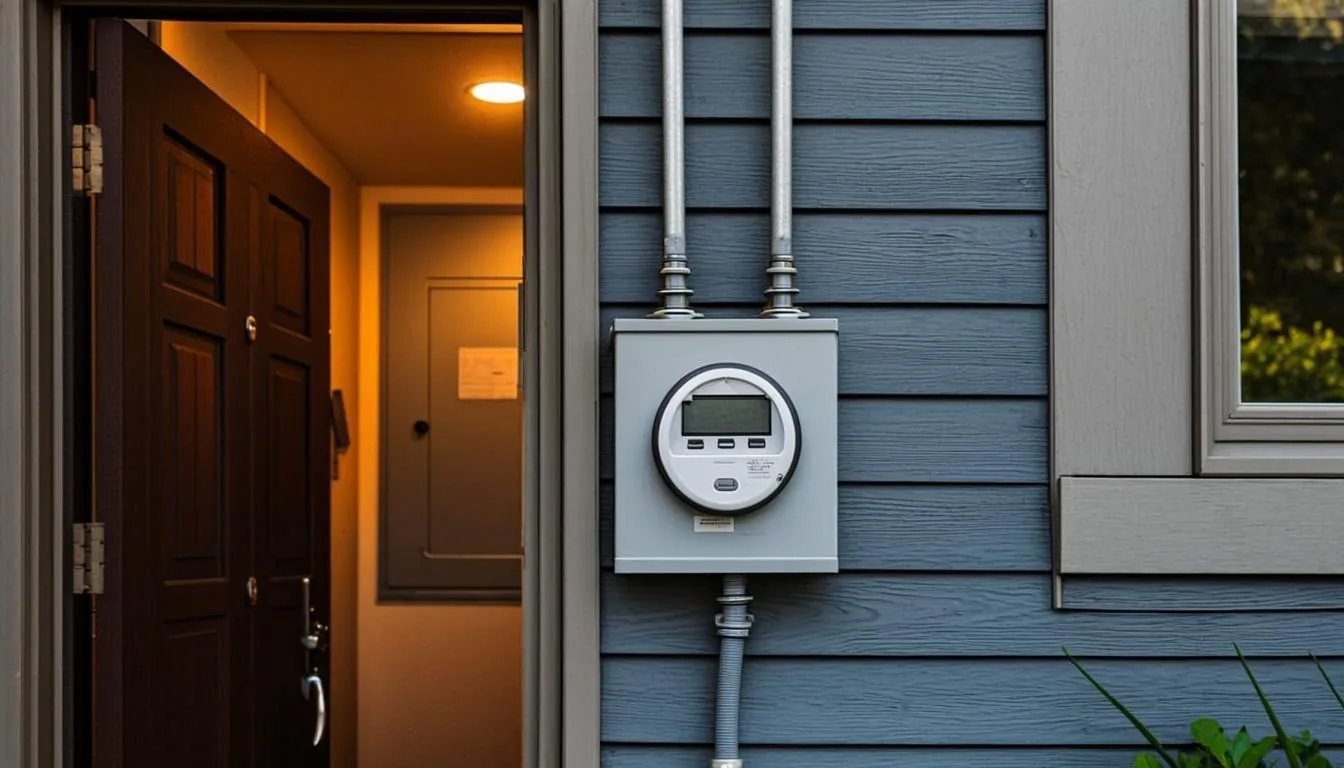
Service entrance equipment lives on the outside wall: the meter base, the heavy conductors running to it, and the conduit or cable shielding them. Replacement projects often leave this equipment alone; upgrades frequently rebuild it, because conductors sized for the old rating cannot simply carry more.
Meters also mark a legal boundary. The utility's responsibility ends on one side and the homeowner's begins on the other, so projects touching that boundary pull the utility into the timeline, whatever the weather.
Homeowners planning an upgrade can help by keeping the exterior route clear and noting where the meter sits. Shorter, cleaner routes make tidier projects.
When Panel Replacement Is Enough
Replacement is the right answer when the box itself is the problem: failing breakers, worn equipment, no slots left, while the load calculation confirms the existing rating still suits the house. Homeowners with gas appliances and no electrification plans often land here: new equipment, more circuits, no utility involvement.
When Service Capacity Must Increase
Capacity upgrades arrive with plans rather than failures. An EV charger on a modest panel, a heat pump replacing a gas furnace, a kitchen filling with electric appliances: each adds demand, and stacked together they can outrun the service. When the calculation says the ceiling itself is the constraint, a new panel alone cannot carry the house.
Where the verdict is condition, our panel upgrade work in Bothell restores the box; where it is capacity, our electrical service upgrade team rebuilds the pathway and coordinates the utility.
Utility Coordination
Utilities control their side of the connection, so work at the service entrance needs their participation: a planned disconnection, restoration afterward, and occasionally updates to utility equipment. Panel replacements usually skip this step; upgrades do not, which is why they carry longer lead times.
Project Cost and Permit Considerations
Both projects are permitted electrical work, and for Bothell addresses the permits run through Washington State L&I, with inspection before sign-off. Cost follows scope: a replacement touches fewer systems, while an upgrade adds entrance work, meter coordination, and heavier equipment.
What neither project supports is a figure quoted without a visit. Wiring condition, access, and grounding hide behind walls until someone looks, which is why written, itemized estimates are the only kind worth comparing. For the signals that point toward replacement, our guide to when a panel needs replacing covers the signs.
Frequently Asked Questions
Is a service upgrade just a bigger panel replacement?
No. The panel is one component; a service upgrade rebuilds the pathway from the utility connection to the new equipment, including entrance conductors and meter coordination, and raises the rating those components carry. A replacement swaps the box and keeps the rating, so check which scope each quote describes.
Can I replace my panel without touching the meter?
Frequently, yes. Panel replacement usually stays inside, leaving the meter and entrance equipment as they are, provided they suit the existing rating. Exceptions appear when equipment is damaged, outdated, or when an upgrade raises the rating and the pathway must be rebuilt to match.
Who coordinates with the utility during a service upgrade?
Your electrical contractor does. Scheduling the planned disconnection and restoration, meeting the utility's requirements at the meter, and sequencing outdoor work around their visit all sit with the team performing the job. Homeowners keep appointments clear and get advance notice of the outage window.
Does either project require a permit in Bothell?
Both do. Panel replacement and service upgrades are permitted electrical work, and for Bothell addresses the permits come through Washington State L&I, with an inspection of the finished work. Filing and scheduling belongs to your contractor; a quote leaving permits out is just incomplete.
Two projects, one clean way to tell them apart: a load calculation, run before anyone quotes anything. For that calculation and an honest read on which fits, dial (425) 285-8045 and start with measurements.