How Much Does It Cost to Install a Home EV Charger?
What does a home EV charger installation cost in Bothell? It is the first question nearly every owner asks, and the honest answer is that the total is assembled, not announced. A charger install is a small electrical construction project with several moving parts: the charging unit, the wiring between your panel and your parking spot, the labor to route and connect that wiring, the capacity of the panel supplying it, and the permit that makes the work legal. Two houses on the same street can land in different places for reasons that only reveal themselves on site.
This guide breaks the cost into those parts, one section at a time. The published ranges on our EV charger installation page bracket what most homes pay, but a figure quoted before anyone has looked at your panel is still a guess. What you will find here is a map of the decisions that move the total, so you can read any written estimate and understand exactly what each line is buying.
What Goes Into the Cost of a Home EV Charger Installation
Most projects draw on the same five buckets, and each bucket varies by house:
- The charger itself, priced by brand, amperage output, and built-in features
- Electrician labor, which scales with how much circuit work the route demands
- Wiring materials, since conductor and conduit grow with every foot of distance
- Panel capacity, when the load calculation shows the home needs more headroom
- The electrical permit and inspection that close out the job properly
A charger mounted near a healthy panel leans mostly on the first two buckets. Projects with detached garages and crowded panels touch all five, and knowing which situation you are in is worth more than any national average.
Charger Equipment Costs
Charging hardware is the line you control most directly, and it carries the widest spread. Units differ by brand, by amperage output, and by how much intelligence is built in: a basic model that simply delivers power sits below a networked unit that schedules charging sessions, reports energy use, and manages itself through an app. Mounting style matters as well, because hardwired and plug-in equipment carry different installation requirements.
One specification deserves attention before you shop: certification. Utility rebate programs commonly require ENERGY STAR certified, connected chargers, a point the Department of Energy's home charging guidance reinforces with its advice to use certified equipment installed by a qualified electrical contractor. Choosing a certified unit costs you nothing extra in planning and keeps every rebate door open later, including the utility programs covered further down this page.
Electrical Labor and Installation
Labor follows scope more than anything else. Setting a charger on the wall beside the panel and connecting a short, exposed circuit is a compact job. Routing a new dedicated 240-volt circuit through finished drywall, fastening conduit along its route, and terminating both ends cleanly is a larger one, and the electrician's time reflects that difference. Expect the invisible work to be counted too: the load calculation, circuit sizing, labeling for the inspector, and a full test session before the crew packs up. That care is what lets an installation pass inspection the first time instead of generating a return visit.
Wiring Distance and Conduit Requirements
Distance is the quiet variable in most estimates. The circuit travels from your electrical panel to the parking spot, and every foot of that journey adds conductor, conduit, and labor. An attached garage with the panel on a shared wall sits at the simple end of the range. Garages at the far side of the house mean fishing wiring through finished spaces or running conduit along the exterior. A detached garage goes a step further still, because the circuit must cross the yard, which can mean trenching, conduit rated for burial, and restoration of whatever the trench passes beneath.
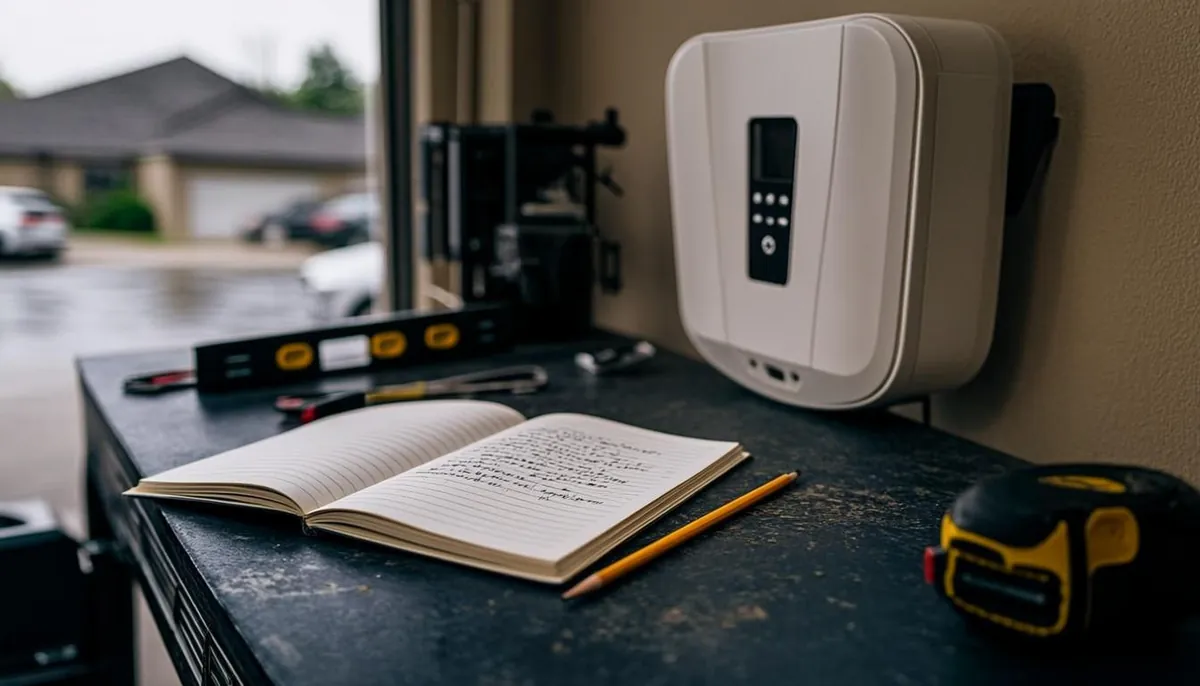
Conduit, the protective tubing that carries the wiring, becomes a visible part of the project on longer runs like the one pictured. Planning that route early keeps the material list honest, the wall tidy, and the inspection uneventful.
When a Panel Upgrade Adds to the Project
A charger draws heavily, and it draws for hours, which is why the National Electrical Code rates EV charging as a continuous load. The panel has to carry that demand alongside the furnace, the dryer, the water heater, and everything else competing for capacity. When the load calculation shows little headroom, the honest options are load management or added capacity, and added capacity is where electrical panel upgrades enter the picture. The project then includes a panel replacement with its own scope, materials, and permit, which is a different shape of job than a circuit addition. A contractor who measures first will tell you plainly which situation you are in, before you buy a charger you cannot yet power.
Permits and Inspection Costs
Permits are priced by the state, not by your contractor, so this line should look consistent across the bids you collect. Homeowners are sometimes surprised that the city does not issue these permits itself: the City of Bothell Permit Center points electrical work to Washington L&I, where many applications are filed online. The fee depends on the scope described in the application, and the inspection of the finished work is part of the same process. When you compare estimates, confirm that permit filing and inspection scheduling sit inside the quoted price rather than arriving later.
Rebates That Can Offset Your Cost
Rebates do not lower what you pay on install day, but they change what you keep afterward. Puget Sound Energy residential customers can qualify for a home charger rebate when the equipment and the installation meet the program's terms, and the current requirements, including which chargers are eligible, are published on PSE's EV home charger rebate page. Read those terms before buying equipment rather than after, because eligibility rules are specific and programs revise them over time. Bothell spans two counties, so confirm which utility serves your address before counting on any rebate.
The Cost to Install a Level 2 Charger, in Plain Terms
Pulled together, the cost to install a Level 2 charger at home stacks four layers: the charging unit, the labor to mount and wire it, the materials along the circuit, and the permit that makes the work official. A short run from a roomy panel compresses every layer; a detached garage or a loaded service stretches them. That is why two neighbors on the same block can hold quotes that differ by hundreds of dollars and both be correct.
The level matters less than the path. Whether the hardware is a hardwired unit or a plug-in model on a receptacle, the circuit work beneath it is the same project, and the equipment tier changes one layer while the wiring route changes the rest. For a line-by-line walk of how estimates should be structured, the site assessment below produces exactly that.
How to Get an Accurate Estimate
An accurate figure comes from a site assessment, not from a phone script. A proper assessment covers four things: a load calculation on the existing panel, a walk of the wiring route from panel to parking spot, a placement decision based on how the car actually parks, and a permit plan for the work. From that visit you should receive a written estimate that itemizes equipment, labor, materials, and permit handling, so nothing arrives later as a mystery line. Treat any quote issued without a site visit as a placeholder. Contractors who measure first are the ones whose numbers still hold on install day.
The through-line of every section above is that cost follows scope, and scope is knowable. Once the wiring route, panel capacity, and permit path are established, the price question resolves into ordinary arithmetic. If you are weighing an EV charger installation in Bothell, the fastest route to a real number is a load assessment followed by a written scope, and we are glad to start with both.
Curious what your project would include? Call (425) 285-8045, tell us how your garage or driveway is set up, and we will walk you through what the assessment covers.