Level 1 vs. Level 2 EV Charging: What's the Difference?
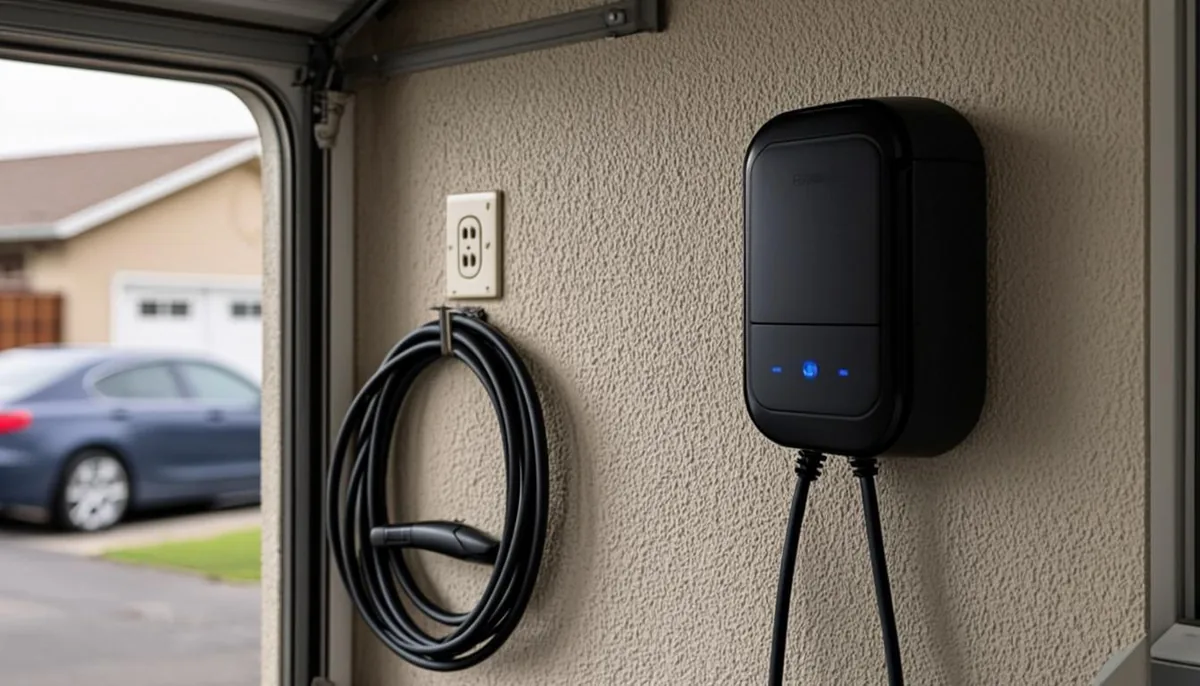
Level 1 vs Level 2 EV charging: which one does your Bothell home actually need? Most new EV owners hit it in the first week, once the included cord starts feeling slow. Both levels refill the same battery; what differs is speed, and speed starts with the wiring behind the outlet.
This guide compares the two in plain terms: what each level is, how much range each adds, what installation involves, and how to match charging to the way you drive. Homeowners who already know they want faster charging can go straight to our EV charger installation in Bothell service, which begins with a load assessment before any equipment enters the conversation.
Understanding Level 1 and Level 2 EV Charging
Charging levels describe the voltage feeding the car. Level 1 is the portable cord most EVs ship with: one end into the vehicle, the other into an ordinary household outlet. The Level 2 option is dedicated charging equipment, wall mounted or plug-in, running on 240 volts, the voltage behind electric dryers and ranges.
Neither level charges the battery directly; each delivers alternating current, and hardware inside the car handles the conversion before energy reaches the cells. Voltage sets the ceiling on charging speed, and the two levels sit far apart on that scale.
Level 1 Charging: Voltage, Amperage and Charging Speed
Level 1 charging runs on 120 volts, standard household voltage, and it borrows a circuit that was never designed around a car. Amperage draw stays modest because the outlet shares capacity with whatever else sits on that circuit, from a garage freezer to the shop vacuum. Nothing gets wired or permitted, which is why new EV owners start here.
Patience is the trade. Through a standard 120-volt outlet, Level 1 adds approximately 5 miles of range per hour, the pace published by the Department of Energy's Alternative Fuels Data Center. Park in on Friday evening and the battery is fuller by Sunday, yet a busy midweek schedule can outrun what the cord recovers overnight.
Level 2 Charging: 240V Electrical Requirements
Level 2 equipment draws on the 240-volt service that typical homes already carry for large appliances, and that heavier supply changes the math completely. By that same Department of Energy charging reference, an hour on Level 2 equipment returns approximately 25 miles of driving range. A few hours of overnight charging covers what Level 1 would need most of a day to deliver.
Speed has an electrical price. A Level 2 charger expects its own dedicated circuit, a two-pole breaker in the panel, and conductors sized to the unit's input rating, because charging pulls hard for hours at a stretch. Plug-in models connect to a 240-volt receptacle, which keeps the charger itself easy to replace; that receptacle route is a service of its own, described on our 240V EV charger outlet installation page. Hardwired models connect straight to the circuit and suit exposed walls better.
Charging Time Comparison
Set the two levels side by side and the pattern is simple. Level 1 trades speed for simplicity; Level 2 trades installation scope for a full battery every morning.
| Factor | Level 1 | Level 2 |
|---|---|---|
| Voltage | 120 volts, standard household outlet | 240 volts, appliance-grade service |
| Typical range added per hour | Approximately 5 miles | Approximately 25 miles |
| Circuit requirement | Existing outlet, no new wiring | Dedicated 240-volt circuit from the panel |
| Best suited for | Short commutes, plug-in hybrids, cars that sit all day | Daily driving, larger batteries, fast overnight recovery |
Read the table against your calendar. A driver covering a handful of miles a day, whose car sits from dinner until morning, may never feel Level 1's pace. Commuters who arrive home low and leave early have a different problem: Level 2 refills in one evening what Level 1 would still be chasing the next afternoon.
Installation Requirements for Home Charging
Level 1 asks almost nothing of your electrical system. A sound outlet on a circuit that is not already crowded, plus a cable route that does not cross a walkway, covers the whole checklist. Everything beyond that is convenience.
Level 2 is real electrical work. It begins with a dedicated 240-volt circuit sized for continuous duty, since charging equipment runs for hours at full draw and the electrical code treats it that way. Capacity is the next gate, and homeowners cannot eyeball it. Guidance on charging an EV at home from the Department of Energy spells out the spread: some homes lack the electric capacity for Level 2 equipment as they stand, while a qualified electrician can add circuits to supply what is missing. Plenty of houses are one circuit away from ready; others need capacity work first. A load calculation, where everything the house draws is weighed against the panel's rating, settles which side you sit on; an electrician should run the rest in order: assess, calculate, then design.
Which Charging Level Is Right for Your Driving Habits?
Match the charger to the miles, not to the marketing. Level 1 earns its keep for short daily distances, for plug-in hybrids with small batteries, and for second cars that sit parked most of the week. If the outlet keeps up with your calendar, using it costs you nothing.
Level 2 fits everything else: commuters, households with two electric cars, anyone who arrives home low and leaves early, and owners who want charging finished before the dryer and the water heater start their evening. Scheduled off-peak charging comes with it, refilling the car during the cheapest hours your utility offers. Once daily driving regularly outruns overnight recovery on Level 1, the upgrade stops feeling optional.
Unsure which side of that line you sit on? Our EV charger installation in Bothell team answers it with a load calculation, not a guess.
Frequently Asked Questions
How much faster is Level 2 charging than Level 1?
Per hour, about five times the range: the Department of Energy lists roughly 5 miles per hour on Level 1 and about 25 miles per hour on Level 2. Session length still depends on battery size and how low the car is, but the per-hour gap stays fixed.
Can my panel handle a Level 2 charger?
Only a load calculation can say, and guesses go both directions. Some panels have headroom for a dedicated circuit right away; others share capacity through load management; a few need capacity work first. We measure at your panel and tell you which case is yours before a single purchase.
Do I need a new outlet or a hardwired charger?
Either works, and the choice hinges on location and plans. A 240-volt receptacle suits plug-in chargers you may replace or take along; a hardwired unit suits exposed outdoor walls, where its sealed connections hold up better. The load assessment usually settles it once capacity and placement are known.
Is Level 1 charging bad for the battery?
No. Level 1 is simply slower, and slow charging is easy on battery hardware; the trade is time, not battery health. The practical downside is the clock: when driving outpaces overnight recovery, the car starts mornings below full, and Level 2 becomes the fix.
Level 1 is the cord you already own; Level 2 is the setup most drivers grow into. For a straight answer about which fits your house, call (425) 285-8045 and book a Bothell-area assessment. We measure first, then recommend.