How Does a Level 2 Home EV Charger Work?
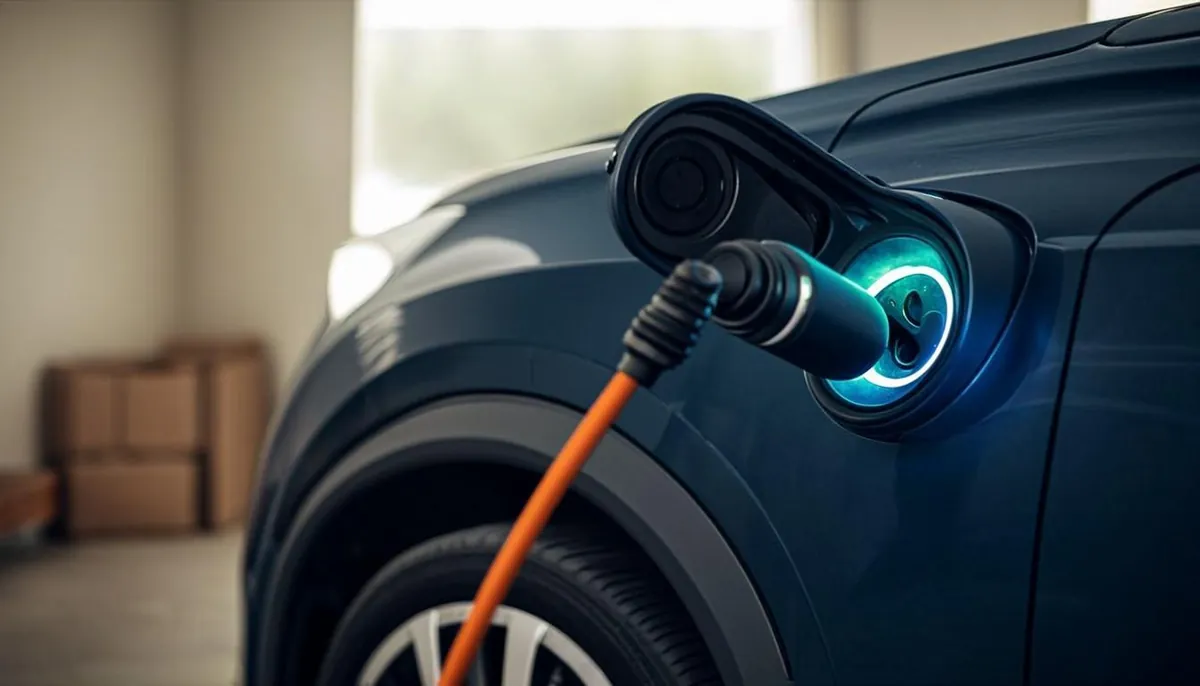
How a Level 2 home EV charger works is a fair question for any Bothell homeowner holding a boxed charging unit, and the answer is friendlier than the hardware looks. A wall unit delivers 240-volt power to your car, the car converts that power for its battery, and a dedicated circuit keeps the whole arrangement safe. Each piece is worth understanding before you buy.
Knowing the machinery pays off twice: you will ask sharper questions when comparing chargers, and you will see why an installer cares more about your panel than about the badge on the box. If you would rather skip the theory and have it handled, our EV charger installation in Bothell service covers the work from load assessment to test charge.
What Is a Level 2 EV Charger?
A Level 2 charger is a 240-volt unit built to refill an electric car much faster than a standard household outlet, either wall mounted or plugged into a heavy-duty receptacle. It is permanent equipment in a way the portable cord in the trunk is not: fixed location, fixed circuit, and a weather-rated enclosure when it lives outdoors. Inside the housing sit a control board, a relay that connects and disconnects power, and the cable that ends in the connector your car expects.
Two hardware styles cover the market. Hardwired units connect directly to the circuit behind them, with no plug anywhere in the path. Plug-in units connect to a 240-volt receptacle, which makes the charger itself an afternoon swap; the receptacle work behind that setup is its own project, described on our Level 2 charger installation page for outlet installs. Both styles perform the same core job, and the next section explains what that job is.
How AC Charging Works
Household power is alternating current, AC, which reverses direction many times each second. An EV battery cannot store it that way; the battery takes direct current, DC, electricity flowing one direction only. Something has to convert between the two, and with AC charging that converter lives inside the car.
Engineers call it the onboard charger: a component in the vehicle that turns the AC arriving through the cable into the DC current the battery accepts. The wall unit's role is narrower than most people assume. It supplies AC power, verifies the connection is sound, and lets the car set the pace; conversion is the vehicle's job. Public DC fast stations work in reverse, converting current in the cabinet so power enters the battery directly, which is why those cabinets are the size of a refrigerator and your home unit hangs on a wall.
A short conversation happens before any current flows, too. The charger and the car exchange signals that confirm everything from connection quality to the maximum current the vehicle will accept, and charging starts only when both sides agree. Unplug mid-session and the flow stops just as automatically.
240V Power Supply and Dedicated Circuits
The 240 volts feeding a Level 2 unit is not exotic; it is the same service typical homes already use for electric dryers and ranges. That doubled voltage is what gives Level 2 its pace: plug in for an hour and the Department of Energy's published figure is roughly 25 miles of range regained, per its EV charging infrastructure overview. Speed starts at the panel, not at the unit.
Dedicated circuits are the other half of the arrangement. A dedicated line is reserved for the charger alone: its own breaker, its own conductors, nothing else tapping in along the way. Code is the reason. Under the National Electrical Code, EV charging infrastructure counts as a continuous load, which the Department of Energy's guidance on charging at home points out, and continuous loads get circuits sized for that kind of sustained running rather than everyday peaks.
Charging Amperage and Power Output
How quickly the battery refills comes from two ratings meeting, and the lower one always wins. One limit is what the equipment can push, which follows the charger's amperage rating and the circuit behind it. The other is what the car can take, which follows the onboard converter described earlier. A high-output unit feeding a car that accepts less simply charges at the car's pace, and a modest unit never overwhelms a big converter.
Flexible output is worth seeking out for exactly this reason. Some units let the installer dial their draw to match the circuit, which matters on panels with less headroom; the Tesla Wall Connector is a familiar example, and its configuration options get a full walkthrough on our Tesla Wall Connector installation page. When you compare chargers, treat the amperage rating as the start of the conversation, because the circuit and the car finish it.
Smart Charging Features
Wi-Fi connected chargers add a layer the basic units lack. Through an app you can schedule charging for the hours your utility prices lowest, watch each session in real time, and on some models hand over load management, the feature where the unit throttles its own draw while the household is pulling hard and returns to full speed once the kitchen goes quiet.
Connectivity also has a rebate angle. Utility rebate programs typically require ENERGY STAR certified connected chargers rather than basic models, as the Department of Energy explains in its home charging guidance, so the smart feature set is often what makes equipment eligible in the first place. If a rebate is part of your budget, check the certification before buying the charger, not after.
Installation Requirements
Three things stand between a boxed charger and a working one. First, a dedicated 240-volt circuit from the panel, with breaker and conductors matched to the unit's input rating and the length of the run. Second, panel capacity: a load calculation compares what your house already draws with what the new circuit will add, and the result points toward a clean addition, load management, or electrical panel upgrades where the service itself is the bottleneck. Third, paperwork: charging circuits are permitted work, and the electrical permit for a Bothell address is filed through Washington L&I, the agency that also inspects the finished installation.
The order matters as much as the list. Capacity determines the circuit, the circuit determines the charger's usable output, and the charger determines the equipment you should buy; working backwards from a box on a shelf is how hardware gets purchased twice. A site assessment runs the sequence forward instead.
That is the whole machine: 240 volts from a dedicated circuit, an onboard converter in the car, and a smart layer on top if you want it. When you are ready to put one on the wall, call (425) 285-8045 for a Bothell-area assessment, and we will start with your panel rather than the catalog.