What Is EV Charger Load Management?
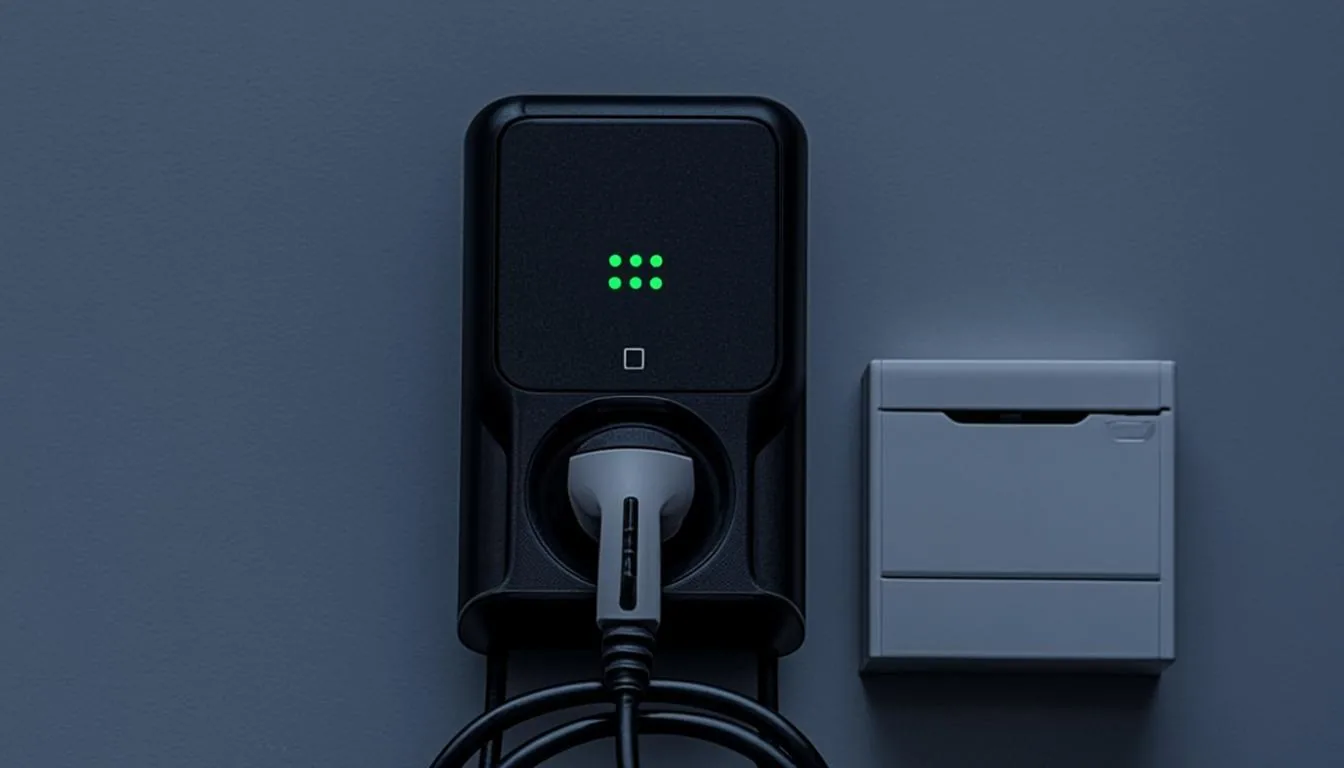
EV charger load management works like a traffic controller for household electricity, sequencing demand so the car and the rest of a busy Bothell house never collide at the same moment. Where panels are full of life but short of headroom, that controller can be the difference between installing this season and rebuilding first.
Below: how the two flavors of management differ, what the equipment watches, and where the approach fits, from single 100 amp services to multi-car households.
How Dynamic Load Management Works
Dynamic systems watch the service in real time and hand the charger a live budget. When the heat pump kicks on, charging steps down or pauses; when the house goes quiet, the car gets the difference back. Nobody juggles by hand; the equipment negotiates continuously against actual demand.
Static vs. Dynamic Load Management
Both flavors solve the same problem with different reflexes. Static management fixes the charger's ceiling in advance and holds it, blind to the house; dynamic management reads live demand and shares whatever capacity exists at that moment.
| Aspect | Static load management | Dynamic load management |
|---|---|---|
| How the limit is set | Fixed ceiling configured in advance | Live budget recalculated continuously |
| Awareness of household demand | None once configured | Reads actual demand as it happens |
| Use of available headroom | Conservative, holds a reserve | Claims capacity the moment it frees up |
| Best suited for | Predictable schedules and steady households | Homes whose evening demand swings widely |
Choosing between them is less about sophistication and more about how variable your evenings are. Clockwork houses may never need the dynamic version; shifting schedules usually want it.
Monitoring Household Electrical Demand
Every managed system needs eyes. Some chargers read demand through a sensor clamped around the service conductors; others take cues from a connected energy meter at the panel. Accuracy matters more than brand here, since the whole arrangement depends on knowing within moments when the house needs power back.
Status lights on the charger tell the story once the system is live: steady while the household rests, dimming or pulsing when the panel gets busy. Small signals, working in plain sight.
Balancing EV Charging and Other Appliances
The payoff shows up on crowded evenings. Dinner cooks, the dryer tumbles, and the car sips instead of gulping while the main breaker never notices the party. Householders describe the effect as polite charging rather than slow charging, because the battery still fills by morning; the quiet hours hand back what the evening borrowed.
Load Management for 100 Amp Services
Smaller services see the most visible benefit. On a 100 amp service, a managed charger can often coexist with electric heat, a range, and a dryer that would overwhelm an unmanaged circuit. Management stretches headroom rather than manufacturing it, so the calculation still rules: where the tally passes with management in the plan, this pairs naturally with the routes in our EV charger without a panel upgrade guide; where it cannot, the panel upgrade conversation returns.
Multiple EV Charger Applications
Two cars change the conversation without ending it. Power sharing divides one circuit's allowance among several ports, and dynamic systems coordinate multiple vehicles against the whole service. Apartment garages and workplace lots run the same logic at larger scale, which our multifamily EV load management post covers for property owners.
Equipment Compatibility
Not every charger manages loads the same way, and some do it natively. Tesla's Wall Connector incorporates automatic load management, and its output is configured on the unit during commissioning; at its largest residential setting the equipment pairs with a double-pole 60 amp breaker, while smaller configurations exist precisely to fit existing electrical systems, as Tesla's Wall Connector installation guidance documents.
Chargers without built-in management can sometimes gain the feature through an external energy-management module, and the compatibility check happens during the assessment, never after purchase. No single breaker size is universal; sizing follows the equipment configuration and the load calculation together.
Installation Considerations
Installation looks ordinary from the driveway: the charger mounts, the circuit gets run, the intelligence lives in configuration. What differs is setup, since the system must learn the household's patterns and any sensor must land on the correct conductors. Permits and inspection apply as they would for any charging circuit in Washington, and the EV charger installation in Bothell team covers wiring and configuration together.
Frequently Asked Questions
How do static and dynamic load management differ?
Static management fixes the charger's ceiling in advance and never wavers, regardless of what the house is doing. Dynamic management reads live demand and reallocates capacity moment to moment, letting the car use headroom as soon as it appears. Static is simpler; dynamic wastes less of the capacity you already own.
Will a managed charger leave my car undercharged by morning?
Rarely. Managed systems step down only during demand spikes, then return the difference during quiet hours, and overnight windows are long. Drivers with extreme commutes or very large batteries should say so during the assessment; the configuration can prioritize charging hours to account for mileage. Undercharging is a configuration problem before it is a technology limit.
Can two EVs share one charging circuit?
Yes, through power sharing, which divides a single circuit's allowance among multiple charging ports so the combined draw stays within limits. The cars take turns or split the supply depending on the equipment. It is a common answer for two-EV households, and dynamic systems can coordinate both vehicles against the whole service.
Does every charger support load management?
No. Some units manage loads natively, some pair with external energy-management modules, and others lack the feature entirely, which is why equipment choice and electrical assessment happen together. During a site visit the electrician confirms which chargers fit your panel's reality and configures the limit the calculation supports.
Traffic controllers do not build new roads; they make existing roads carry more. If your panel could use that kind of help, call (425) 285-8045 and ask what managed charging would change at your house; the load assessment that follows decides whether management, not construction, is the answer.