How Does EV Charging Load Management Work in Multifamily Buildings?
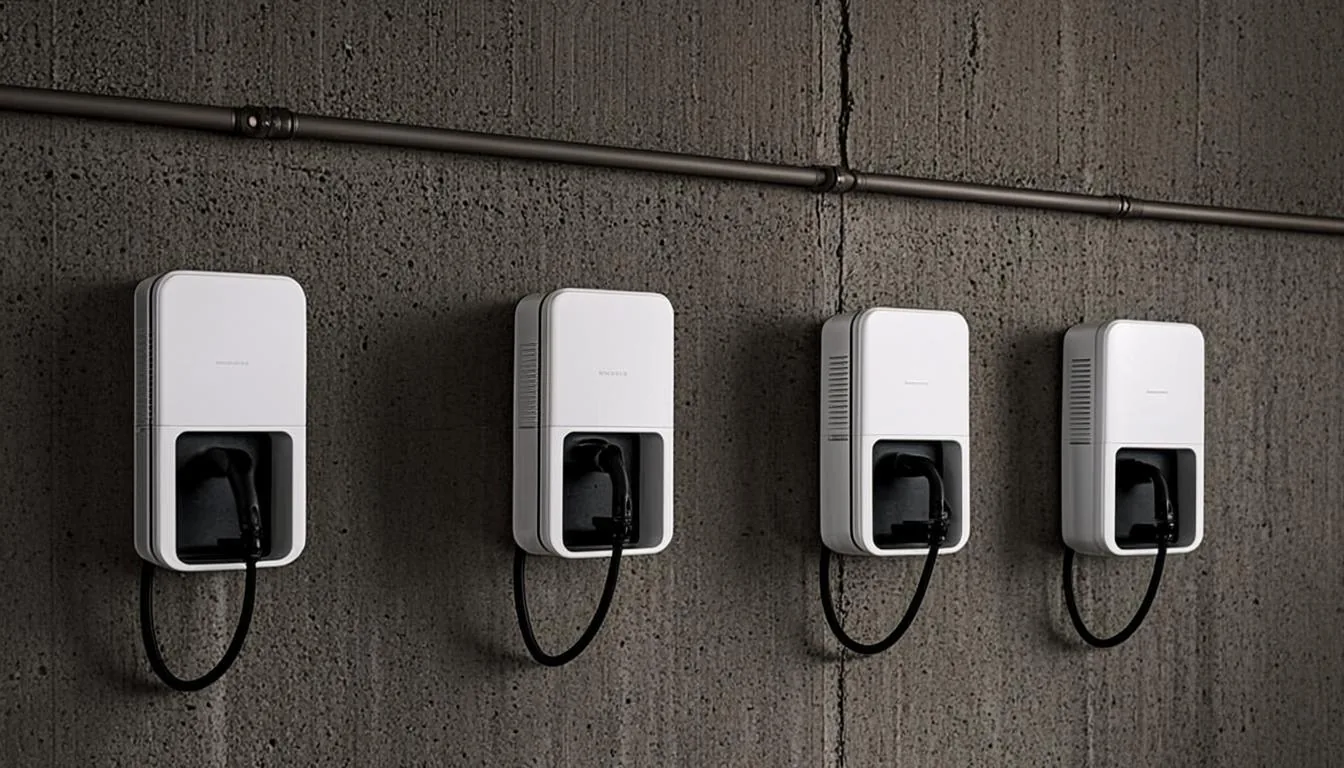
Multifamily EV charging load management answers the question Bothell-area property managers ask before any other: how many chargers fit on the electrical service the building already has? Before new infrastructure enters the conversation, scheduling the chargers you install can multiply how many stalls actually charge. That makes it the least invasive capacity tool a property owns.
This guide explains the three main approaches, how each one decides which car receives current and when, and where each fits a building's plans. Residential installs use the same thinking at smaller scale; our EV charger installation in Bothell page shows that side of the practice.
Electrical Capacity Challenges in Multifamily Properties
A multifamily service is sized for refrigerators, dryers, and lighting, not for a parking level where every stall might draw like a range. Add chargers one at a time and the building's peak demand climbs until the service runs out of headroom. The problem is timing as much as volume, because cars plugged in at the dinner hour all ask for power at once.
EV Charging Demand and Peak Loads
Charging is demanding by design: the National Electrical Code treats EV charging as a continuous load, meaning equipment is expected to draw at full strength for hours rather than minutes. A garage's peak is therefore set by how many cars charge simultaneously. Flatten that peak, spreading the same energy across more of the night, and the same service supports more stalls. Flattening peaks is the entire discipline of load management.
Static Load Management
Static load management sets a fixed ceiling on what the charging system as a whole may draw. The limit is configured once, and the stations divide that allowance among themselves no matter how many cars are present. Simple and predictable, it protects the building's service; the cost is capacity that sits idle on quiet nights when only a few cars are plugged in.
Dynamic Load Management
Dynamic load management reads the building's live consumption and adjusts charging output moment to moment, harvesting spare capacity that a static system would leave unused. Equipment sometimes builds this in: the Tesla Wall Connector incorporates automatic load management, with its output configured on the unit, and its largest residential configuration uses a double-pole 60 amp breaker. No single breaker size is universal; equipment is matched to the panel it joins.
Multiple Charging Stations
As stations multiply, coordination between them becomes the design question. Stations acting alone compete for capacity; stations that communicate divide it deliberately, so a car that is nearly finished releases its share to a neighbor that just plugged in.
Properties planning a whole bank of stations should design the group as one system from the start, with a coordinating device keeping the total draw inside the building's allowance. Retrofitting coordination after independent installs costs more and delivers less.
Power Sharing
Power sharing brings the idea down to the stall cluster: two or more stations agree in advance to split a fixed supply among themselves. Cars alternate or divide the current, and the cluster never exceeds the capacity allotted to it. It suits properties adding a small group of stalls without touching building infrastructure, and it pairs naturally with assigned parking.
The three approaches, side by side:
| Approach | How it works | What it needs | Where it fits |
|---|---|---|---|
| Static load management | A fixed ceiling is set once, and stations divide it | Configured stations and a known capacity limit | Garages that want simple, predictable protection |
| Dynamic load management | Output adjusts live against the building's actual use | Equipment that reads building consumption | Properties squeezing the most from an existing service |
| Power sharing | A stall cluster splits one agreed supply | Stations that coordinate as a group | Small installations on assigned stalls |
Electrical Infrastructure Planning
Load management stretches an existing service; it does not abolish limits. Planning still maps the electrical rooms, models demand as residents adopt electric cars in waves, and reserves space for the day capacity must grow. Where the constraint is the building's own service, our electrical panel upgrade in Bothell team scopes the larger fix, and the single-family version of the same math is described in our EV charger load management guide.
Future Charging Expansion
Expansion goes smoothly when the first installation anticipated it: spare conduit pulled during phase one, panel space held in reserve, and a management system that accepts additional stations without redesign. Phasing also matches budgets, letting demand and infrastructure grow in step rather than betting the entire garage on the first round. For the resident-facing side of shared garages, our apartment EV charging guide covers approvals, billing, and stall assignment.
Frequently Asked Questions
What is EV charging load management in plain terms?
It is a way of dividing available electrical capacity among several charging stations so the building never draws more than its service allows. Instead of every car charging at full speed simultaneously, the system staggers or shares the supply. More stalls end up fitting on the same infrastructure as a result.
Does load management slow down charging?
Sometimes, and only briefly. When several cars demand power at once, each receives less until others finish, then speeds recover automatically. Across a full night most vehicles still reach their target, because demand is spread rather than eliminated. The trade is coordination, not lost energy.
Can load management replace a service upgrade?
It can postpone one, and sometimes remove the need for a property's first phase of chargers. The honest answer comes from a capacity study: model the building's existing peak, add managed charging, and see whether headroom remains. If the math still falls short, infrastructure work is the next step.
When is dynamic management worth it over static?
For buildings with meaningful spare capacity that sits unused overnight, dynamic wins, because it harvests that idle room automatically. Static suits simpler installations where a fixed ceiling is enough and budgets are lean. The deciding input is the building's load profile, which a capacity study reveals before equipment is chosen.
Which approach fits depends on the building's load profile, and that is measurable before anyone commits to equipment. Property managers around Bothell can dial (425) 285-8045 and start the conversation with a capacity study.