When Should You Install a Subpanel for EV Charging?
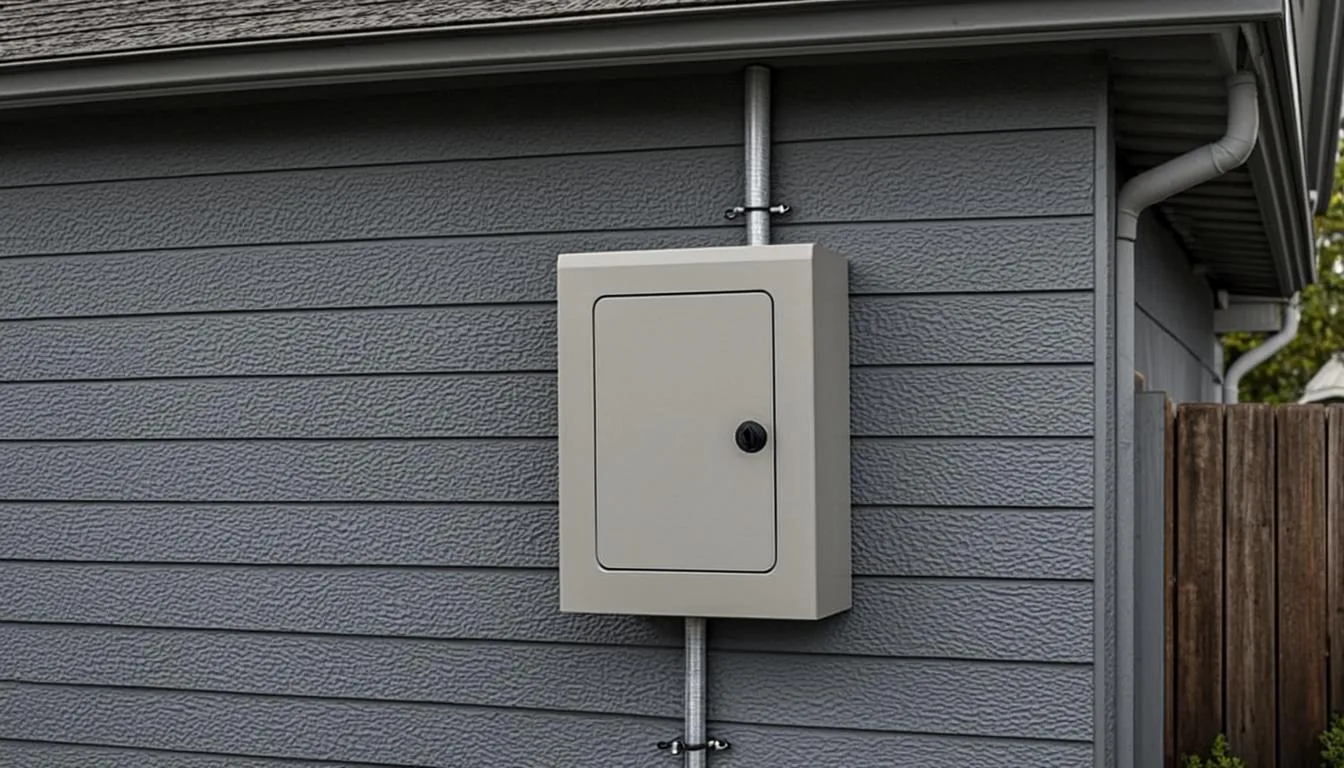
Deciding where a new charger circuit should live is the first fork many Bothell homeowners reach: does it come off the main panel, or does a subpanel for EV charging make more sense in the garage? Both routes deliver power; they differ in wiring runs, capacity bookkeeping, and how easily the setup absorbs the next appliance.
This post covers what a subpanel is, when one earns its place, and how permits work locally. To apply it to your own walls, begin with our subpanel installation service in Bothell, which opens with a load calculation before hardware talk.
What Is an Electrical Subpanel?
An electrical subpanel is a smaller distribution panel supplied by a feeder, the set of heavy conductors carrying power between boxes. It holds its own breakers, splits the feed among branch circuits, and sits wherever circuits cluster: a garage, an addition, a workshop. Power still originates at the meter; the subpanel just moves protection closer to its loads.
Homeowners sometimes mistake a subpanel for extra capacity. It adds slots and convenience, not supply; everything flowing through it still counts against the main panel's rating.
Main Panel vs. Subpanel
Two boxes, two jobs. The main panel receives the utility's service and holds the main breaker, branch breakers for the whole house, and the grounding that anchors the system. A subpanel is downstream equipment, fed through a two-pole breaker in the main panel and responsible only for the circuits behind it.
Adding one means confirming the main panel has a free feeder slot and headroom to supply it. Our main panel vs. subpanel explainer covers the division of labor further.
When a Garage Subpanel Makes Sense
Certain situations point toward a garage subpanel, and they stack:
- The main panel sits far from the garage, with a string of cable runs behind it.
- Panel slots are scarce, yet electrical headroom remains.
- The garage will power more than the charger: a freezer, tools, a future appliance.
- Two electric vehicles are planned, with a second charging circuit on the horizon.
- A remodel is already opening garage walls.
Any single item can tip the decision; several together settle it outright.
EV Charger Circuit Requirements
A Level 2 charger, the 240-volt unit most EV owners install, needs a circuit of its own. The National Electrical Code counts EV charging equipment as a continuous load, so wiring and breakers are sized for hours at full output rather than bursts. Breaker sizing follows the charger's input rating; no single breaker size fits every garage.
Placement matters alongside capacity. The circuit should reach the parking spot without crossing walkways, and the unit should sit where its cable reaches the charge port. Our Bothell EV charger installation team handles that layout.
Feeder Capacity and Conduit
When a subpanel serves the charger, the feeder becomes the most important wire on the job. Its size comes from the load calculation: everything the subpanel will host, charger included, is totaled, and the feeder conductors and their breaker are sized to carry that demand. Conduit, the tubing sheltering those conductors, suits the route.
No feeder should be picked from a chart without the math behind it. An undersized one strangles the circuit you are building; an oversized one spends money on copper the house cannot use.
Detached Garage Applications
Detached garages add a few formalities. The feeder travels underground or overhead, the building needs its own grounding arrangement, and disconnect rules apply at the structure. Done properly, the outbuilding ends up with a panel that behaves like a small outpost of the house system. Our detached garage EV charger guide covers that scenario end to end.
Subpanel vs. Main Panel Upgrade
A subpanel and a main panel upgrade answer different problems. When the main panel lacks electrical headroom, a subpanel just divides the shortage between two boxes. If the panel is healthy but short on slots, or far from the garage, a subpanel solves it.
Upgrading the main panel replaces the box with a larger one and usually touches the service entrance as well. It is the broader project, the right call when the calculation says the house's ceiling, not its slot count, is the constraint.
Permits and Inspection
Work of this kind is permitted work. Electrical permits for Bothell addresses run through Washington L&I, whose electrical permit and inspection guidance describes the process, and inspectors there use the current edition of the National Electrical Code. Feeders, subpanels, and charging circuits deserve trained eyes before they are energized.
Pulling the permit and scheduling the inspection are part of our job; homeowners keep one appointment clear.
Frequently Asked Questions
Does adding a subpanel increase my home's total electrical capacity?
No. A subpanel splits supply that already exists, adding slots and convenience instead of wattage. Capacity is set by the service and the main panel, which is why a load calculation comes first: it confirms the main panel can feed the subpanel and everything attached.
Can I run a charger straight from the main panel instead?
Often, yes, and it is simpler when the panel sits close to the garage with slots and headroom to spare. A subpanel earns its place when distance, crowded slots, or extra garage loads complicate the run. Your load calculation compares both paths.
How is a subpanel feeder sized?
By calculation, not habit. The electrician totals everything the subpanel will serve, applies the code's continuous-load rules to the charging circuit, and sizes the feeder conductors and their breaker for the combined load. Identical chargers in two garages can end up with different feeders.
Do I need a permit to add a subpanel in Bothell?
Yes. Subpanel work is electrical work, and for Bothell addresses permits are handled through Washington L&I, whose inspectors follow the current National Electrical Code. Your contractor files the permit and arranges the inspection; you keep the schedule clear for the visit that closes it.
Whichever box ends up owning the charger circuit, let the decision start with numbers from your own panel, not a brochure. For that starting point, call (425) 285-8045 and we will map the route from meter to parking spot.