How to Install an EV Charger in a Detached Garage
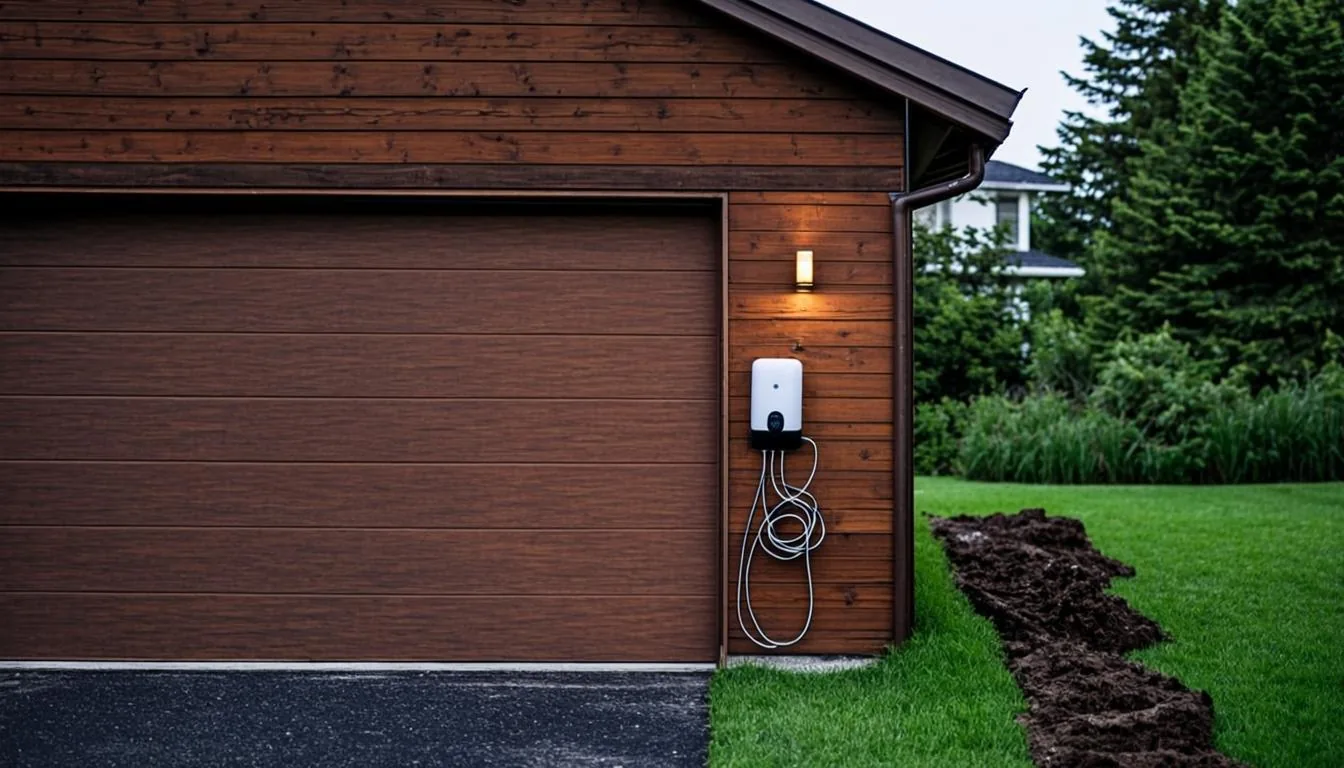
Adding an EV charger in a detached garage is a different project for Bothell homeowners than mounting one inside the house, because the wire has to leave the building first. Four walls of separation bring a trench, a feeder, sometimes a subpanel, and equipment chosen for outdoor air. None of it is complicated for a prepared installer, but every piece shapes the plan and the price.
This guide walks the project in order, from panel capacity through the trench to the final inspection, so you can read your own property the way an electrician will.
Electrical Requirements for Detached Garage Charging
A detached structure is treated as its own building, electrically speaking: power arrives through a feeder sized for its load, protection is arranged where the circuit originates, and the garage's grounding is established on site. The project unfolds in this order:
- Assess the main panel. Spare capacity and physical space are measured before any equipment is chosen.
- Choose the feeder approach. A subpanel in the garage or a dedicated feeder circuit, depending on the structure's other needs.
- Route the raceway. The trench is dug and conduit is set between the buildings at the depth the code requires.
- Pull and terminate the conductors. The feeder is wired, garage-side protection is set, and connections are landed at the charger.
- Inspect and energize. The state inspection closes the permit, and charging begins after sign-off.
Assessing the Main Electrical Panel
Everything downstream depends on spare capacity at the main panel. A load calculation weighs the home's existing demands, from the dryer to the water heater, against the service rating, then asks what remains for charging. Homes with headroom proceed straight to design; tight panels get capacity work first, and the charger plan waits.
Subpanel vs. Dedicated Feeder
Two routes can feed the garage. A subpanel is a small distribution panel inside the structure, fed from the house, ready to serve the charger plus lights, outlets, and whatever else the space grows into. The dedicated feeder takes the opposite approach: one circuit running straight from the main panel to the charger with nothing else attached. Single-purpose garages favor the direct route, while multi-use spaces usually justify the subpanel; our subpanel installation in Bothell page covers that route, and our guide to subpanels for EV charging compares the two.
Underground Conduit and Wiring
Between the buildings, the feeder travels underground through conduit, a protective pipe that shields conductors from soil, moisture, and shifting ground. The route is chosen with the homeowner, avoiding irrigation lines, tree roots, and future garden plans. Splices stay out of the buried run; conductors are pulled after the conduit is set, so every connection lives where it can be reached.
Trenching is the part of detached-garage work that surprises owners most. It is not simply digging a straight line: the path must clear other buried utilities, hold depth for its entire length, and end with the surface restored, whether the surface is lawn or paving. An honest estimate treats the trench as real work, because it is.
Distance Between the House and Garage
Distance quietly drives the whole plan. A longer run means more conductor, more trenching, and more voltage drop to manage, any of which can nudge the feeder design upward. Short crossings beside a driveway are a morning's conversation; a route that wraps the house and crosses a patio is a project with staging.
Walk the path before requesting estimates and count the corners. Footage moves the price more than almost anything else, and an installer who knows the true distance can design the run instead of padding it.
Weather Protection and Outdoor Equipment
A garage fed from outside lives with the weather, so the equipment has to match. Outdoor-rated conduit and fittings protect the run where it surfaces; the charger must be listed for the location it occupies, whether an exterior wall or a garage interior that sees cold snaps. Weather-protected installations also plan for the cable itself, keeping the connector off wet concrete and out of standing water between sessions. Placement choices, covered in our garage EV charger location guide, matter as much here as anywhere.
Permits and Electrical Inspection
Detached-structure work is permitted work, without exception. The feeder, the trench, and the charger circuit all fall under electrical permitting, which for Bothell addresses is obtained through Washington L&I, and the finished wiring gets inspected before it is energized. Homeowners comparing installers should expect the EV charger installation in Bothell process to include the permit and the inspection, not a drill and a disclaimer.
Installation Cost Factors
No two backyards price the same, and the honest variables are easy to name. Distance drives conductor and trenching quantities. The feeder approach matters, since a subpanel adds equipment that a direct circuit never needs. Trench difficulty, surface restoration, and the charger's own rating round out the spread. Two neighbors with identical houses can receive different estimates for this reason alone, and both can be correct.
Frequently Asked Questions
Does a detached garage need its own subpanel for EV charging?
Not always. A dedicated feeder circuit from the main panel can serve a charger directly when the garage has no other electrical needs. Subpanels earn their place when the structure will also carry lighting, outlets, or future equipment. Load calculation and distance between buildings usually settle the choice together.
How deep does the trench have to be?
Depth is a code question rather than a fixed number, because the requirement changes with the wiring method protecting the conductors. Your electrician selects the method first, then trenches to the depth that method requires. The closing inspection confirms both on site.
Can I charge from the house with an extension cord instead?
No. Extension cords are not built for hours of continuous charging current, and a detached garage adds weather and distance on top of that. Charging equipment needs a permanent circuit, sized and protected for the load, terminating at listed equipment. Anything less creates heat at connections nobody is watching.
Does the whole project need a permit, or just the charger?
Every part of the scope is permitted: the feeder between buildings, the trench work, and the charger circuit all fall under electrical permitting, which for Bothell addresses runs through Labor and Industries. The closing inspection covers the complete installation, not just the new equipment. Your contractor obtains the permit before work starts.
A detached-garage charger is straightforward when the trench, the feeder, and the panel are planned as one project. Sketch your route, note the distance, then ring (425) 285-8045 to talk it through before the shovel comes out.