Tesla Wall Connector vs. Mobile Connector: Which Should You Choose?
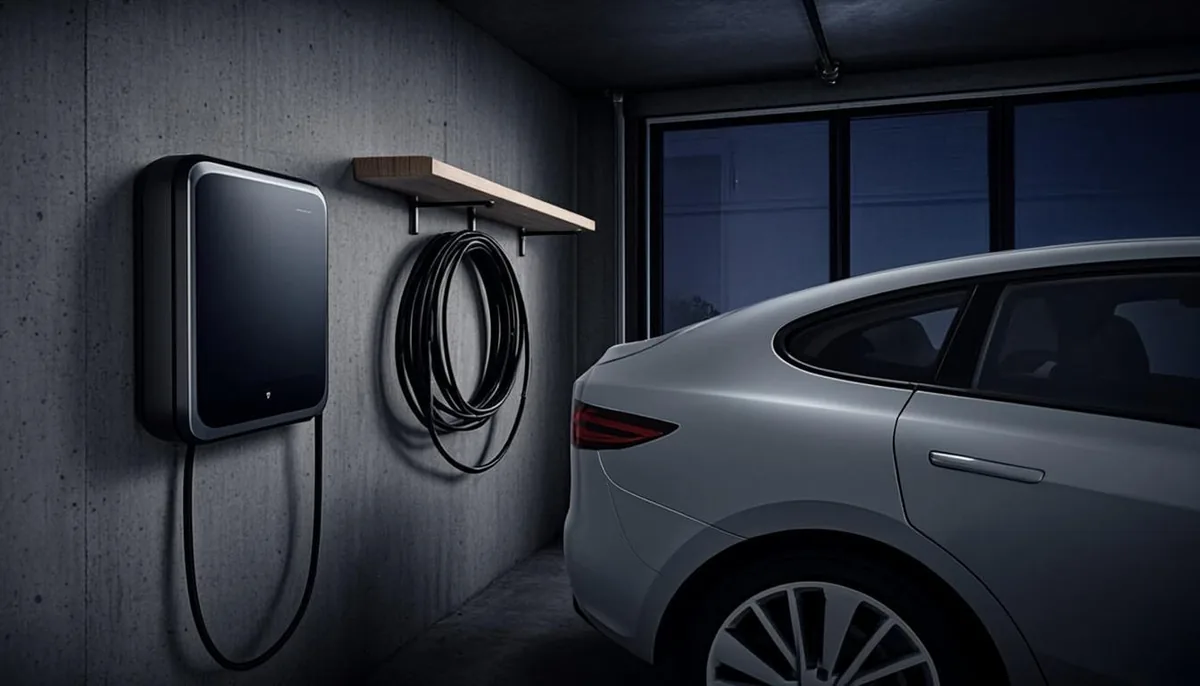
Tesla Wall Connector vs Mobile Connector is a comparison nearly every Bothell Tesla owner runs through, because Tesla sells two charging tools built for two very different routines. One is a permanent charging unit wired into your home. The other is a cord that rides in the trunk.
This guide compares what each device does well, how their speeds differ, and what the electrical side of each demands. By the end, you should know which one fits your driveway, and when bringing in an electrician makes sense.
Two tools
Two Tesla Charging Options, Two Different Jobs
The Wall Connector is a Level 2 charger, which means a 240-volt charging unit that mounts on a wall and feeds from its own circuit. Once installed, it stays put and is always ready when the car rolls in. The Mobile Connector is the portable counterpart, a charging cord that stows in a bag and plugs into ordinary outlets wherever the car happens to be. Neither replaces the other. One is infrastructure; the other is luggage. That distinction drives everything below.
Permanent option
What the Wall Connector Does Best
Dedicated Hardwired Charging
Hardwired means the unit connects directly to its own breaker and wiring, a path that serves nothing else in the house. That arrangement matters because code treats EV charging as a continuous load, a circuit asked to deliver steady power for hours on end. A purpose-built circuit handles the duty without competing with your dryer, range, or air conditioner.
Fastest Everyday Home Charging
Between the two devices, the Wall Connector delivers the fastest everyday home charging, and by a wide margin. Plugged into its dedicated 240-volt circuit, it refills a day of commuting during the evening and has the battery full long before morning. For households that drive a lot, or that charge two vehicles on one setup, that headroom is the whole point.
Mounted Where You Park
The unit lives on the wall closest to your parking spot, usually a garage wall, with the cable routed to reach the charge port. Nothing gets plugged in or packed away. Come home, lift the handle from its mount, and the session starts; the whole routine takes seconds.
Portable option
What the Mobile Connector Does Best
Portability is the entire appeal. The Mobile Connector works from standard outlets, so it charges wherever there is power: your garage tonight, a relative's driveway over the holidays, a cabin for the weekend. For occasional charging and travel, it is hard to beat a tool that asks nothing of your electrical panel.
It also works as a bridge. Some owners cover modest daily mileage on a household outlet overnight and never feel restricted. Others charge with the mobile cord while they plan a proper installation, then keep it in the car as a travel backup once the Wall Connector goes up.
Speed
Charging Speed Differences
Here is the honest comparison: a Wall Connector on a dedicated 240-volt circuit charges several times faster than a Mobile Connector on a standard household outlet. Same car, same battery, wildly different refuel times. The gap comes down to power delivered; a wall-mounted unit on a proper circuit simply moves far more energy into the pack every hour.
Whether that gap matters depends on your schedule. If the car sits all night either way, a slower overnight refill can still cover a short commute. When the battery needs to be ready by dinner, or two drivers share one charger, the faster unit earns its keep.
Electrical side
Electrical Requirements Compared
The Wall Connector needs real electrical work. Tesla's Wall Connector installation guidance calls for a dedicated circuit put in by an electrician, and the unit's output gets set during commissioning, the setup step that tailors the charger to the circuit it lives on. A permit and inspection are part of doing it properly in Washington, and it is the same scope an electrician brings to any EV charger installation in Bothell.
The Mobile Connector, by contrast, needs no new circuit. It uses a standard outlet you already have, and setup is genuinely plug-and-play. Two cautions apply: charging pulls power for hours at a stretch, so an aging outlet or a heavily shared circuit deserves an electrician's once-over, and the price of that convenience is the slower speed described above.
Decision
Which One Fits Your Home?
Daily driving is the first filter. Long commutes, tight turnarounds, or a second electric car in the household all point toward the wall unit; light, predictable mileage can leave the mobile cord as a perfectly workable answer. Parking setup is the second filter. Garages with room near the panel make installation straightforward, while carport or driveway parking mainly adds placement decisions.
A simple rule of thumb covers most homes: if you charge at home most days, plan for the Wall Connector; if you rarely do, the Mobile Connector may be all you need. When the permanent route wins, Tesla Wall Connector installation in Bothell is the page to start from. Panel capacity worries are common and usually solvable; as the Department of Energy notes in its home charging guidance, a qualified electrician can add circuits to accommodate the capacity needed for Level 2 charging.
Answers
Frequently Asked Questions
Can the Mobile Connector handle daily charging?
For some drivers, yes. If your daily miles are modest and the car sits overnight anyway, a standard outlet can keep up. The moment commutes get longer, turnarounds get tighter, or a second EV joins the driveway, slower charging becomes a daily inconvenience and a dedicated Wall Connector starts to make sense.
Do many homes end up with both devices?
That combination is common. The Wall Connector handles everyday charging on its dedicated circuit while the Mobile Connector stays in the car for trips, second homes, and emergencies. Because the two do different jobs, owning both is not redundancy; it is a way to charge fast at home and flexibly everywhere else.
Does a Mobile Connector require any electrical work?
Not to use it, since it plugs into an ordinary outlet. The caveat is condition: charging runs for hours at a time, so a worn receptacle, an overloaded circuit, or outdated wiring should be checked before you rely on nightly sessions. An electrician can also add a new outlet if none is convenient.
How much faster is the Wall Connector?
On a dedicated 240-volt circuit it charges several times faster than the Mobile Connector does on a standard household outlet. Exact speed varies with the configuration set at installation and with the vehicle itself, but for everyday refueling the difference is large enough to change how you plan your evenings.
Both tools have a place; the question is which one belongs on your wall. If you have decided the wall-mounted route is right for your home, or you simply want a straight answer about your panel's capacity, we are one call away and happy to talk it through without any pressure.
Call (425) 285-8045 and tell us how you drive; we will help you decide, then quote the installation if you want one.