Can You Install an EV Charger in a Townhome?
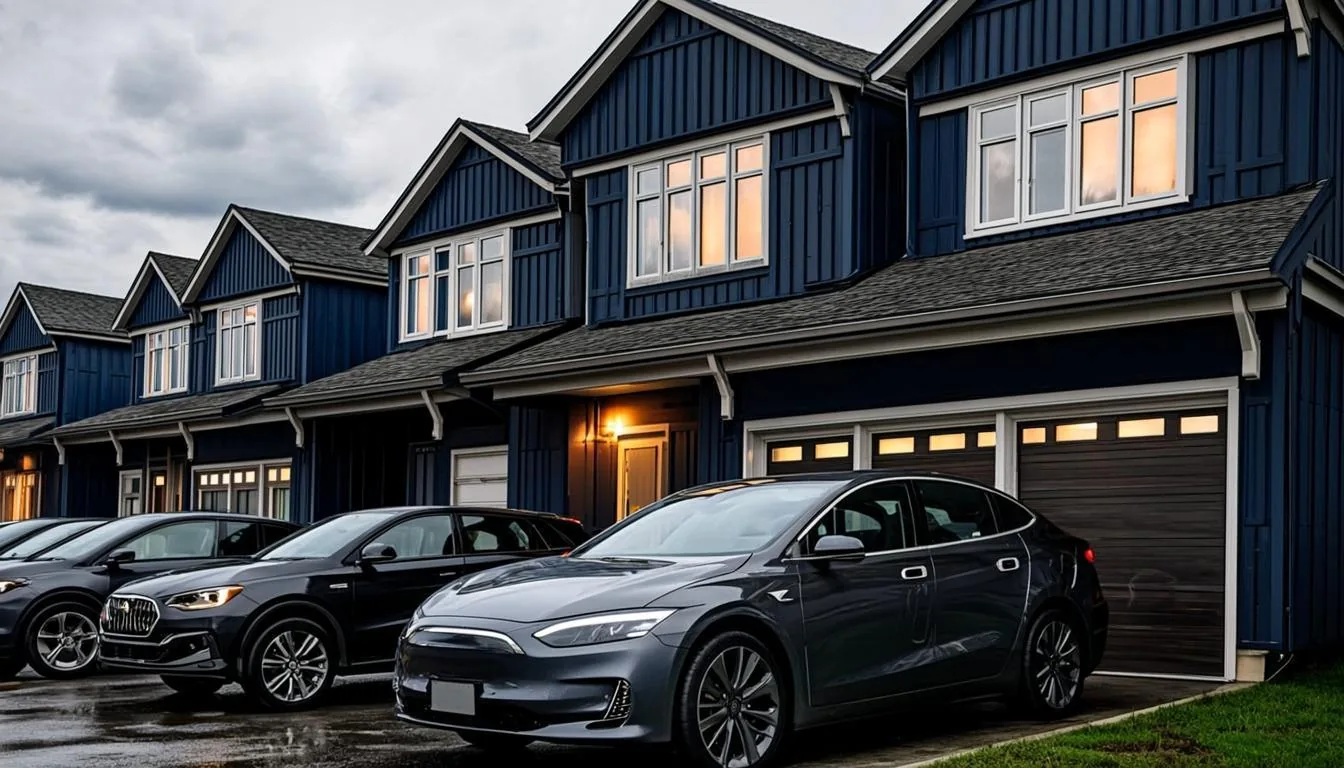
Installing a townhome EV charger is a planning exercise with a clear sequence, and Bothell's attached-home streets reward owners who follow it: confirm what you own, check the panel, plan the wire route, and clear the approvals before ordering any equipment. Tight properties punish improvisation, so the order of steps matters more here than in a detached house.
This guide walks that sequence in full, from the electrical realities of shared walls to the coordination that keeps installation day uneventful.
Understanding Townhome Electrical Systems
A townhome generally carries its own meter, panel, and service even though the structure shares walls with neighbors. That independence is good news: the charging decision belongs to the homeowner rather than a building engineer. Constraints are spatial instead of legal, because panels sit in tight closets, garage corners, or utility nooks with little room to grow. Nearby Mill Creek, with its streets of attached homes, faces the same panel-and-route puzzle; our Mill Creek EV charger panel upgrades page covers that side of the region.
Attached Garage Charging
An attached garage is the natural home for a townhome charger. The wall shared with the house keeps the wire run short, the panel often sits one wall away, and the equipment stays out of the weather year round.
Shared surfaces deserve respect, though. Penetrations must not breach fire separations between units, and cable routes cannot wander through a neighbor's wall cavity. Clean installations keep every run inside the owner's own envelope, from panel to charger, without exception.
Electrical Panel Access
Find the panel first, because everything routes back to it. Panels tucked behind shelving, above freezers, or inside finished closets complicate a job that would otherwise be simple. Space matters as much as location: a charger circuit needs a two-pole breaker and safe working clearance around the equipment. Photograph the panel's interior before the estimate visit; it answers half of the electrician's questions in advance.
Dedicated Circuit Requirements
Charging equipment runs on its own dedicated circuit, sized to the unit and protected at the panel. Sharing that circuit with a freezer or an outlet bank is off the table, because charging draws heavily for hours at a stretch. A dedicated run also simplifies the inspection and keeps charging performance independent of whatever else the household plugs in.
Shared Walls and Wiring Routes
Attached construction narrows the routing menu. Wire prefers unfinished spaces: open garage ceilings, accessible attic runs, and exterior walls the owner controls. Finished interiors, party walls, and spaces belonging to the neighboring unit are excluded. When the panel and the parking stall sit at opposite ends of the home, expect the routing conversation to take longer than the installation itself.
HOA and Property Management Considerations
Where an association governs exteriors, a charger mounted on a garage wall or fed from a shared structure usually needs written approval first. Practical coordination keeps the process painless: submit a short scope describing the equipment and the route, share the electrical plan if asked, and schedule work within community quiet hours. Associations respond best to complete proposals; friction traces to surprise far more often than to the charger itself.
When a Panel Upgrade Is Necessary
Some townhome panels lack the room or capacity a charging circuit requires, especially where the panel also carries electric heat, a heavy appliance set, or an older service. A load calculation settles the question. Where capacity falls short, an electrical panel upgrade in Bothell comes before the charger, and our guide to EV chargers on a 100 amp panel explains how smaller services can still support charging through careful planning.
Installation Process
Most townhome projects follow the same planning sequence from first question to first charge:
- Confirm ownership of the panel, the wall, and the garage or stall
- Photograph the panel interior and note the spare breaker space
- Sketch the route from panel to charger, flagging any shared surface
- Submit the HOA scope and collect written approval where required
- Book the load calculation, then the installation, then the state inspection
Order matters here: approvals and panel facts come before equipment orders, never after. Homeowners ready to move can read our EV charger installation in Bothell overview, and readers facing building-scale questions will find the parallel situation in our apartment EV charging guide.
Frequently Asked Questions
Do I need my HOA's permission to install a townhome EV charger?
Often yes, whenever the charger mounts on an exterior wall or the association governs the garage structure. Equipment wired from your own panel inside your own unit may fall outside review. The safe move is a short written scope submitted before ordering anything: what mounts where, which route the wiring takes, and when work happens.
Can a townhome panel support a Level 2 charger?
Frequently, but only a load calculation proves it for your unit. The panel needs physical room for a two-pole breaker plus enough capacity left over after the home's other demands are weighed. Units with electric heat, stacked appliances, or older services are the likeliest candidates for capacity work first.
Where should the charger go in an attached garage?
On a wall inside your own envelope, close to the parking stall and as near the panel as the layout allows. Keep the charging cable clear of the vehicle's daily path and off any surface shared with the neighboring unit. Placement chosen alongside the wire route almost always beats placement chosen afterwards.
Is a townhome installation harder than one in a detached house?
The electrical core is identical: a dedicated circuit, correct protection, and an inspection at the end. Everything around that core is tighter, from panel locations to association approvals to wire routes that must stay inside your own walls. More planning time, fewer surprises on install day.
A townhome charger rewards the owner who sequences the project deliberately, from panel photo to association letter to installation day. When your plan is ready, phone the team at (425) 285-8045 and we will walk your unit's route with you.