What Size Breaker Does an EV Charger Need?
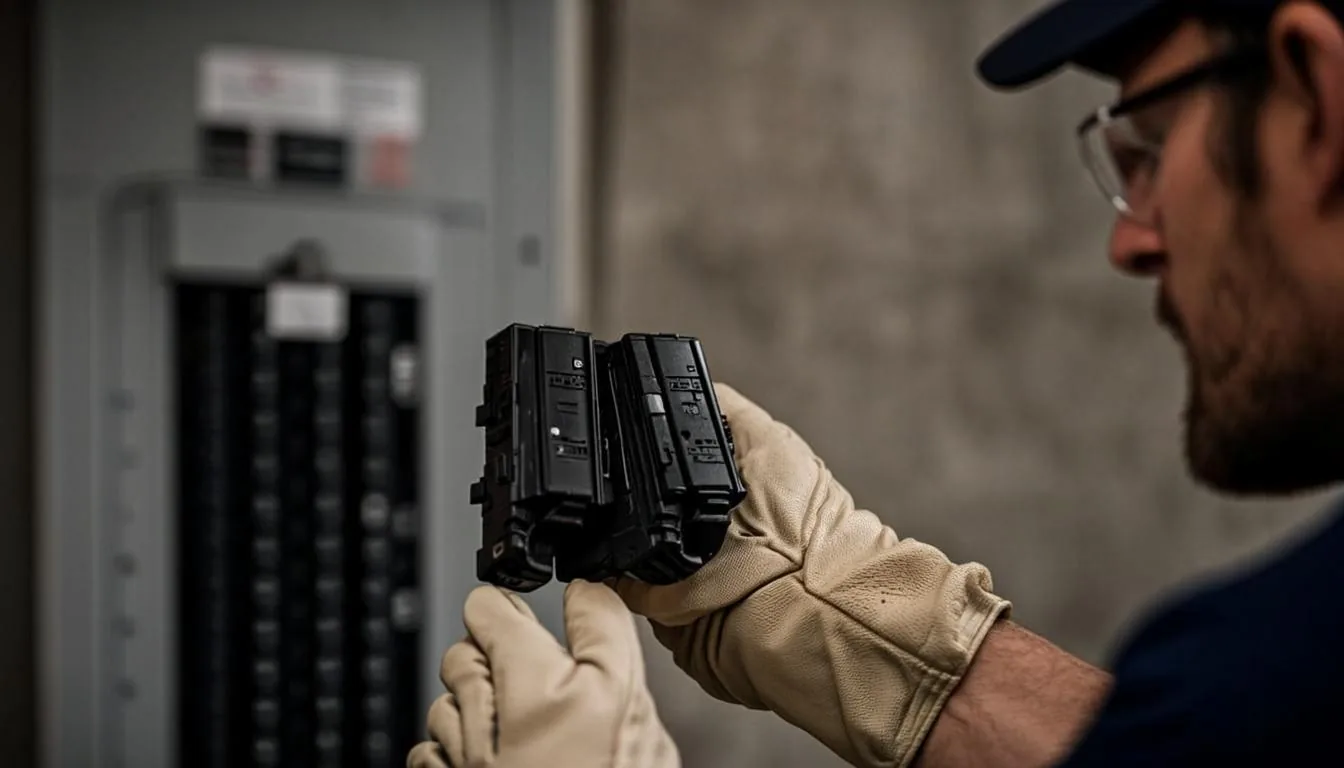
What size breaker does an EV charger need? It is one of the first questions every homeowner asks, and it deserves a better answer than a single number, because the right size follows from how electrical code treats charging loads. EV charging runs for hours without pause, which puts it in a category of demand that wiring rules size more conservatively than your kitchen outlets, and that conservatism is exactly what keeps the circuit cool over a decade of overnight sessions.
This guide explains the sizing rule in plain language, maps the common charger outputs to their breakers, covers the Tesla Wall Connector specifically since it is the unit homeowners ask about most, and shows where panel headroom enters the picture. When you want a professional answer for your specific panel, our EV charger installation in Bothell service starts with a load assessment that settles the question on paper before any wire is pulled.
Why EV Charging Counts as a Continuous Load
Most household appliances cycle: a dryer heats, tumbles, coasts, and rests. An EV charger is different, drawing its rated current steadily for hours on end, which is why the National Electrical Code classifies EV charging equipment as a continuous load. Continuous loads follow a sizing rule that electricians recite like a heartbeat: the circuit must be rated for 125 percent of the load it carries. That 25 percent cushion accounts for the reality that breakers warm up under sustained current, and it prevents nuisance tripping at the worst possible moment, which is always midnight in January.
The arithmetic is simple enough to do at the kitchen table. Divide the charger's output by 0.8 and you have the minimum breaker: a unit pulling 32 amps needs a 40 amp circuit, a 40 amp unit needs a 50 amp circuit, and a 48 amp unit needs a 60 amp circuit. Equivalently, a breaker's usable charging output is 80 percent of its rating, which explains why a "50 amp" setup charges a 40 amp car at full speed and no faster. The same continuous-load logic is why an electrician cares more about the circuit behind a charger than about the badge on its front, a theme that runs through our Level 2 charger explainer as well.
Common EV Charger Breaker Sizes, Mapped
Most residential Level 2 equipment falls into a few familiar output tiers, and each maps to a breaker size that satisfies the continuous-load rule. The table below reflects the standard mapping electricians work with; the unit's installation manual is always the final word, because manufacturers specify the exact breaker their listing requires.
| Charger output | Minimum breaker | Typical use |
|---|---|---|
| 24 amps | 30 amps | Configured-down units on tight panels |
| 32 amps | 40 amps | Plug-in units and modest daily driving |
| 40 amps | 50 amps | The most common hardwired tier |
| 48 amps | 60 amps | High-output units, big batteries, two-car homes |
Two footnotes matter. First, the circuit is sized to the unit's configured output, not its maximum capability; many modern chargers can be dialed down at installation, which is a genuine solution on constrained panels, covered in our charger without a panel upgrade guide. Second, a 40 amp or 48 amp charger connected through a NEMA 14-50 receptacle still sits on a 50 amp breaker and still charges at the car's limit, which our NEMA 14-50 guide explains from the receptacle side.
What Size Breaker for a Tesla Wall Connector?
Tesla's Wall Connector deserves its own paragraph because its answer is a range rather than a number. The unit's output is set at installation by a rotary configuration that lets the installer match the circuit actually available, with breaker sizes stepping up through the 30 to 60 amp double-pole range and output following the same 80 percent continuous-load math as everything else. At the top of the range, a 60 amp circuit delivers the unit's 48 amp maximum; dialed down, the same hardware runs happily on a much smaller service.
That configurability is exactly why the breaker question for Teslas is answered by a site assessment rather than a spec sheet: the right size is whichever matches both the household's charging needs and the panel's remaining capacity. Our Wall Connector requirements guide walks through the configuration options in detail, and our Tesla Wall Connector installation service performs the setup, verification and permitting end to end.
Physical fit matters alongside electrical fit. A 60 amp double-pole breaker takes two panel spaces plus room for neat conductor routing, and older or crowded panels sometimes lack the real estate even when the capacity math works. Subpanel options for tight or remote situations are covered in our subpanel for EV charging guide, and the inspectors' expectations for finished work are described in our Washington electrical inspection guide.
Headroom: Where the Panel Enters the Sizing Decision
A breaker can be the right size and still be the wrong choice if the panel behind it cannot carry the added demand. That check is the load calculation, which adds up what the house already draws, from the water heater to the heat pump, and compares the total against the service rating. The result places the home in one of three camps: room to spare, which means the new breaker goes in as planned; tight, which points toward a configured-down charger or load management; and tapped out, where capacity work such as a 100 to 200 amp panel upgrade comes first.
Homeowners running this math themselves should be careful with the inputs, because nameplate ratings overstate real demand and the code formulas weight loads in ways that are easy to get wrong. Our load calculation guide explains the method, and our 100 amp panel guide shows how often the smaller service turns out to be workable once the calculation is done properly.
Breaker Types, GFCI and the Permit That Ties It Together
A few final details complete the picture. The breaker must match the wiring: aluminum conductors, common on older feeders, terminate differently than copper, and mismatched terminations are a classic heat point. GFCI protection is required for EV charging circuits under recent NEC editions, which Washington enforces through L&I's adoption of the 2023 code cycle, and some manufacturers also specify the breaker type their listing expects, so the installer follows both. Where the charger lives outdoors or in a damp garage, those requirements stack rather than trade off.
All of this is permitted work: the circuit, the breaker change and the charger install are filed through Washington L&I and inspected before energization, a process our WA EV charger permit guide describes step by step. An unpermitted install saves nothing that matters and costs plenty at resale or after a claim, which is why the sequence in this guide ends at the inspection, not the breaker.
Breaker sizing for an EV charger is a rule, not a riddle: 125 percent of the output, matched to a panel with the headroom to carry it. Want that verified for your house before you buy hardware? Call (425) 285-8045 and we will run the numbers with you.